Tofu, a 32-foot juvenile female humpback whale (Megaptera novaeangliae) with an unmistakably white fluke that led researchers to name her after the similarly pale soybean curd, met an untimely end in 2007, and necropsy findings point to the cause of death likely being due to a ship strike. While this common yet preventable threat to cetaceans cut her life short, her death led to invaluable scientific insights into her biology, migratory behavior, and a second life as an educational exhibit at Seacoast Science Center.
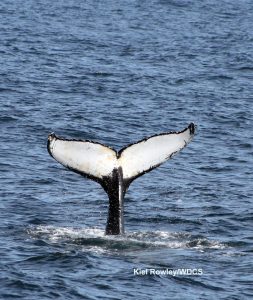
Humpback whales belong to the Balaenopteridae family, distinguished by their long pectoral fins, pleated throats, and a penchant for interpretive dance in the form of acrobatic breaches. Adults can reach lengths over 50 feet and weigh nearly 35 tons. They rely on a diet of primarily krill and small fish, which they often consume using a method that would put synchronized swimmers to shame—bubble-net feeding (among others).
Like all members of the North Atlantic population, Tofu was part of the great migration between the warm calving grounds of the Caribbean and the rich feeding waters of the Gulf of Maine. This route is fraught with danger, not least of which includes unintentional run-ins with very large, very fast steel objects (i.e. ships). A necropsy conducted by marine mammal experts from Seacoast Science Center’s marine mammal team, in partnership with colleagues at New England Aquarium, identified extensive localized areas of trauma/hematoma consistent with blunt-force impact—evidence of a ship strike. This finding was unfortunately not surprising as ship strikes are one of the leading causes of mortality among baleen whales.
Had she been able to avoid human-caused mortality, she may have lived on for 50 years, singing elaborate songs, rearing calves, and participating in the annual humpback whale “dating scene.” Rather than allowing her story to fade into obscurity, researchers and conservationists worked to preserve her skeleton, ensuring that her misfortune would serve a greater purpose. In 2009, after an extensive cleaning and articulation process, her 1,500-pound skeleton was unveiled at the Seacoast Science Center. Suspended from the ceiling, she now serves as the centerpiece of an exhibit on whale ecology, evolution, and conservation.
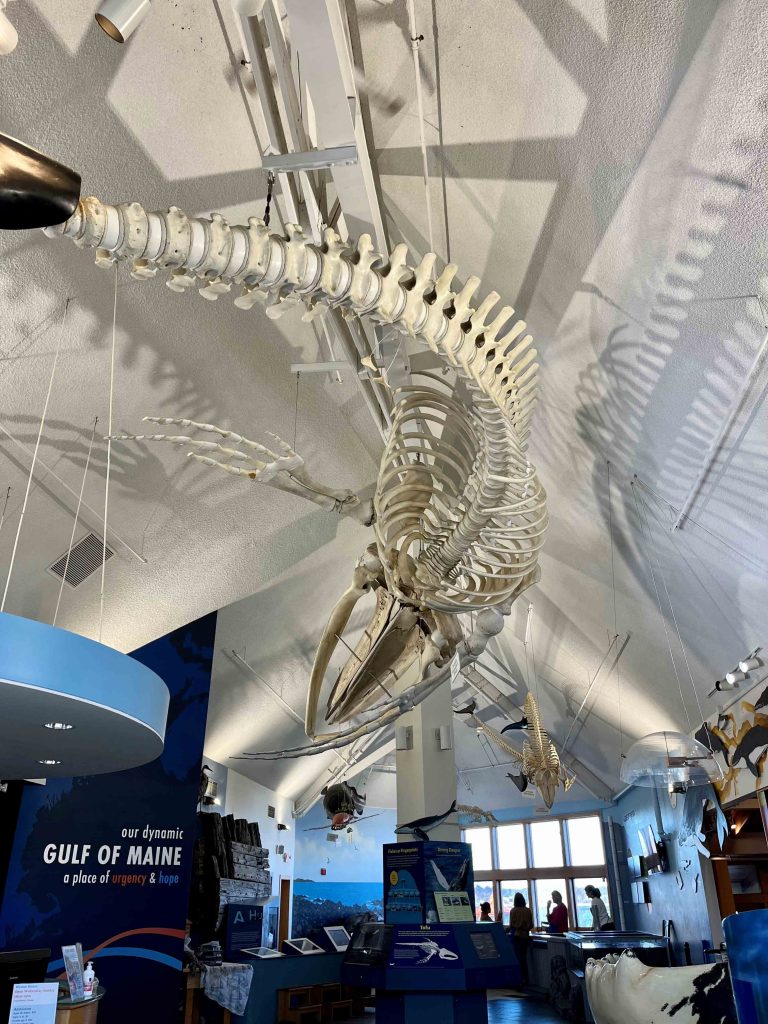
The display allows visitors to see firsthand the sheer scale of these animals while also learning about the threats they face and the importance of ship speed regulations, marine traffic monitoring, and public awareness in protecting humpbacks and other large whales from preventable fatalities. Tofu’s story underscores the complex challenges of human-wildlife interactions in coastal and open water. It also highlights the power of collaboration–where scientists, industry leaders, and policymakers work together to make data-driven decisions that protect both whales and people.
Just two weeks after Tofu’s death, the shipping lanes where she had been swimming were shifted–a change that had been under discussion for some time. Data had shown that these lanes intersected critical whale feeding grounds prompting ongoing conversations among stakeholders. While Tofu’s death was not the direct cause of this shift, it served as a poignant reminder of its urgency, reinforcing the importance of collective action to balance conservation and human activity.
Rest assured; progress has been made. Dynamic management strategies, including speed restrictions in whale migration corridors and real-time whale detection systems, have shown promise in reducing collisions. Additionally, public engagement—fueled by exhibits like Tofu’s—plays a crucial role in fostering conservation-minded policies and behaviors.
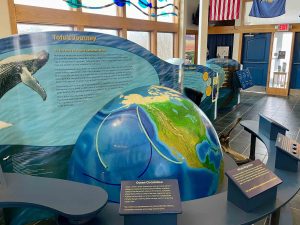
Though Tofu’s life ended far too soon, her impact endures. From a scientific standpoint, her necropsy contributed valuable data to the ongoing studies of whales, and more specifically of mortality events. From a policy perspective, her death underscored the necessity of proactive measures to protect whales from preventable harm. And, from an educational perspective, her skeleton continues to inspire thousands of visitors each year, offering a powerful reminder of the challenges marine life faces and the importance of science-based decision making.
Her story is both a cautionary tale and a call to action: a testament to the resilience of humpback whales and the ongoing responsibility we share in ensuring their survival. Tofu may not have lived to see old age, but she still managed to make a whale of a difference.
