Teamwork Makes the Dream Work

Posted on November 14, 2024

By Lauren McDowell | SSC Marine Mammal Rescue Intern 

Harbor seal release story highlights collaborative efforts of SSC’s Marine Mammal Rescue team with partners at National Marine Life Center

If you see a live or dead marine mammal on shore, call the Seacoast Science Center Marine Mammal Rescue hotline at 603-997-9448​.​

In late October, team members from Seacoast Science Center Marine Mammal Rescue (MMR) and National Marine Life Center (NMLC) successfully released a female harbor seal, Rum Raisin, back to the ocean. This case, like many others, highlights the critical role of collaboration with our marine mammal rescue network partners. The SSC’s MMR Team works closely with various organizations to make these rescues and releases possible. This year alone, 14 percent of our live cases have been transferred to NMLC for care. 

Rum Raisin was first reported on August 24th on the shore near the Rockwood Lodge in Gloucester, MA. NOAA Fisheries received the initial call and reached out to our team for assistance. Although she had some physical wounds, she was otherwise bright, alert, responsive, and was not staying hauled out for long periods of time. So, the team decided to initially monitor her. Rum Raisin was monitored over the next four days, thanks to community members and our trained volunteers, as she came and went from the cove before being collected for further examination on August 29th. She was then transported to NMLC for rehabilitation and officially received the name Rum Raisin after the ice cream flavor, which is the 2024 naming theme at NMLC.  

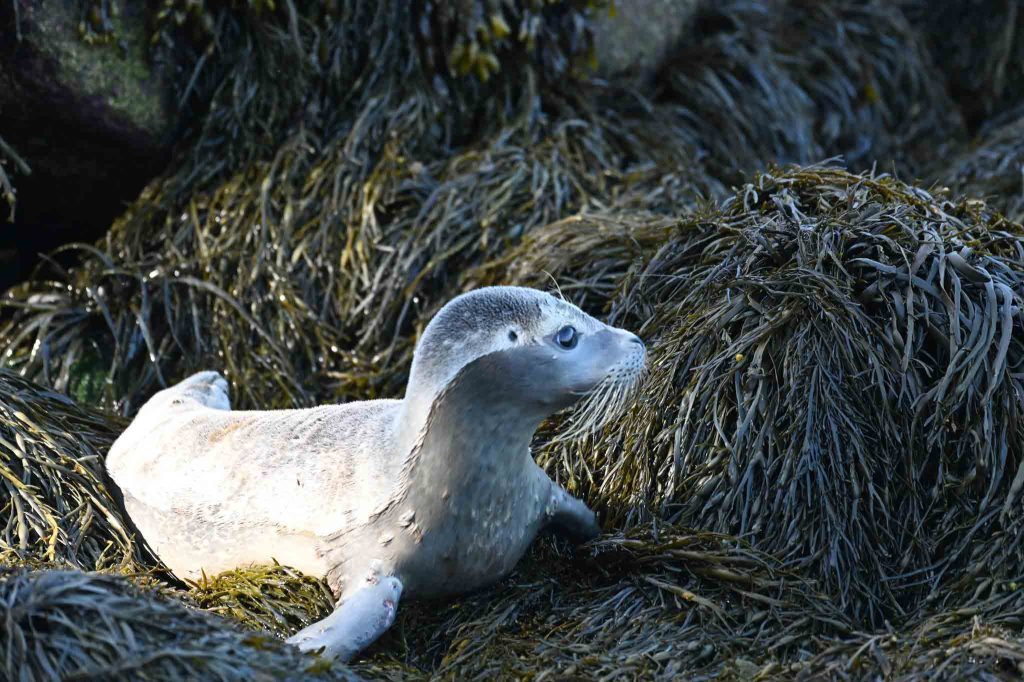
Harbor seal Rum Raisin, rescue photo
One of the first photos received from a community member of the seal. In this photo you can see some of the sealpox lesions on her neck, chest, and flippers.

Over the course of rehabilitation she was diagnosed with a viral infection called sealpox, malnutrition, respiratory distress, anemia, and was later found to also have a vertebral injury. Sealpox can be transferred through skin to skin contact between types of pinnipeds species (seals, sea lions, and walruses). This virus is also a zoonotic disease meaning it can spread from animals to humans, so responders and rehabilitators had to use extra personal protective equipment when handling her. As shown in the photo, sealpox typically presents itself at skin nodules around the abdomen, head, and neck. Death rates are usually low except in juveniles when infection can interfere with feeding and lead to malnutrition. There is currently no treatment for sealpox aside from general pain management and keeping the abscesses clean and free of infection. Providing a safe environment can help resolve the case in 3-5 weeks.
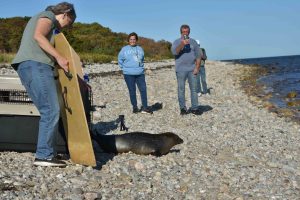
Harbor seal Rum Raisin release with partners at NMLC
Rum Raisin leaves her crate for the last time to go back into the ocean. On the left you can see the volunteers on the “herding boards” standing to the side of the crate to prevent Rum Raisin from turning up the shore or going back into the crate.

After two months of treatment and care for her ailments, Rum Raisin was ready to be released back into her natural habitat. Each release event is incredibly rewarding, as it reflects the combined efforts of many people working to make a difference in the life of one seal. Especially for a weanling seal like Rum Raisin, rehabilitation is not always successful. Conducting and executing a seal release has to be thoroughly planned. All volunteers and staff are assigned a task like helping carry the crate, taking photos, crowd management and education, or handling one of the herding boards. This ensures that the actual day goes smoothly while the live animal is being transported, to maximize efficiency and to limit the time the animal is crated. Sometimes there will even be a practice carry without the animal. Seals are never placed directly in the water when they are released so they can orient themselves before entering the water. Releases can take hours of planning and coordination but once the crate door is open, it will often take less than 10 minutes for the seal to bounce back into the water. It’s a quick but powerful reminder of why we take these small yet meaningful actions to protect our oceans. 
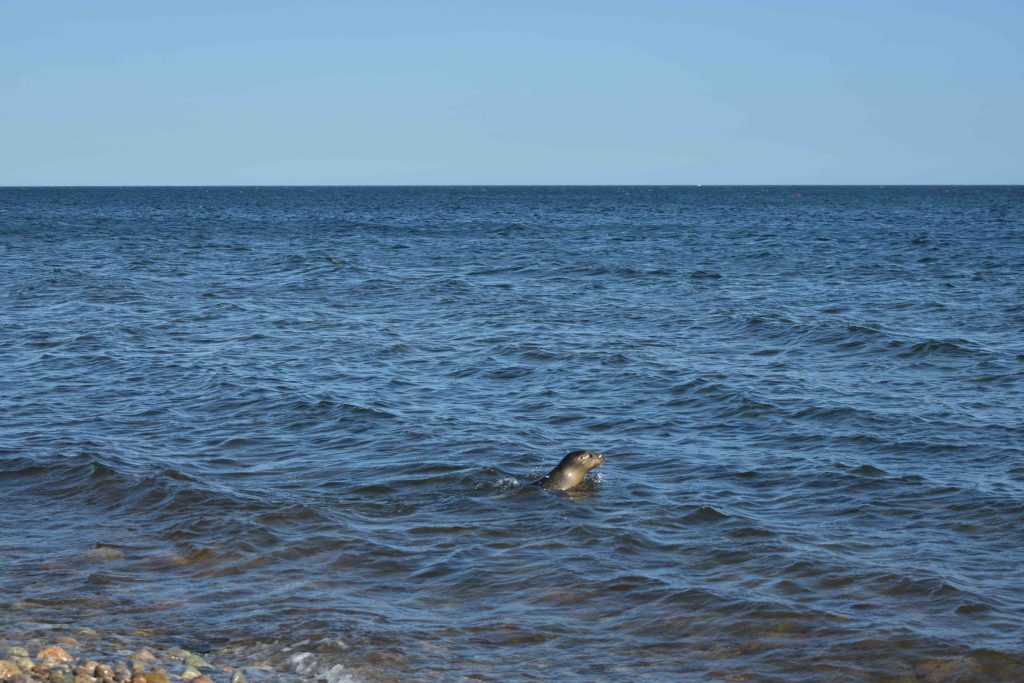
Harbor seal Rum Raisin returns to the ocean
Rum Raisin just minutes after being released into the wild.

We thank our community and MMR volunteers for working on this response case, and the National Marine Life Center team for giving her the best care for over 2 months! 

Visit Seacoast Science Center’s Marine Mammal Rescue page to learn more about the program and to donate. Keep up to date with ​SSC’s MMR team and their work on Facebook. The team relies on support from local businesses and community members to meet its annual operating budget. If you would like to support more marine mammal rescues like this one, please visit our donation page or Amazon Wish List.  

As a reminder if you spot a marine mammal on shore:

  • Call the Seacoast Science Center​ Marine Mammal Rescue hotline at 603-997-9448.
  • Report the exact location, if it’s live or dead, and details about its size, coloring, and behavior.
  • Always maintain a safe distance (of at least 150 feet) from the animal to avoid injury to you or the animal, and to alleviate stress on the animal.

24th Annual BioBlitz!

Sunday, September 20, 2026 • 7 AM-4PM

Join us at Odiorne Point State Park to discover the incredible diversity of species found along our Seacoast. All ages and experience levels are welcome!

CLOSING EARLY: THURSDAY, May 22, 2025. Due to anticipated high winds, we will be closing at 3pm today, to prioritize the safety of visitors, volunteers & staff. Stay safe.

Update: Tuesday, July 7, 2026

Planning to visit today?

It’s a good idea to reserve online, especially with rain forecasted, as rainy summer days often find us at capacity, particularly in the morning, with walk-ins depending on availability. Book tickets here. 

Seacoast Science Center
Privacy Overview

This website uses cookies so that we can provide you with the best user experience possible. Cookie information is stored in your browser and performs functions such as recognizing you when you return to our website and helping our team to understand which sections of the website you find most interesting and useful.