Are changes in our response cases an indication of climate change?
Karen Provazza | SSC Chief Communications Officer
Ashley Stokes | SSC Director of Marine Mammal Rescue
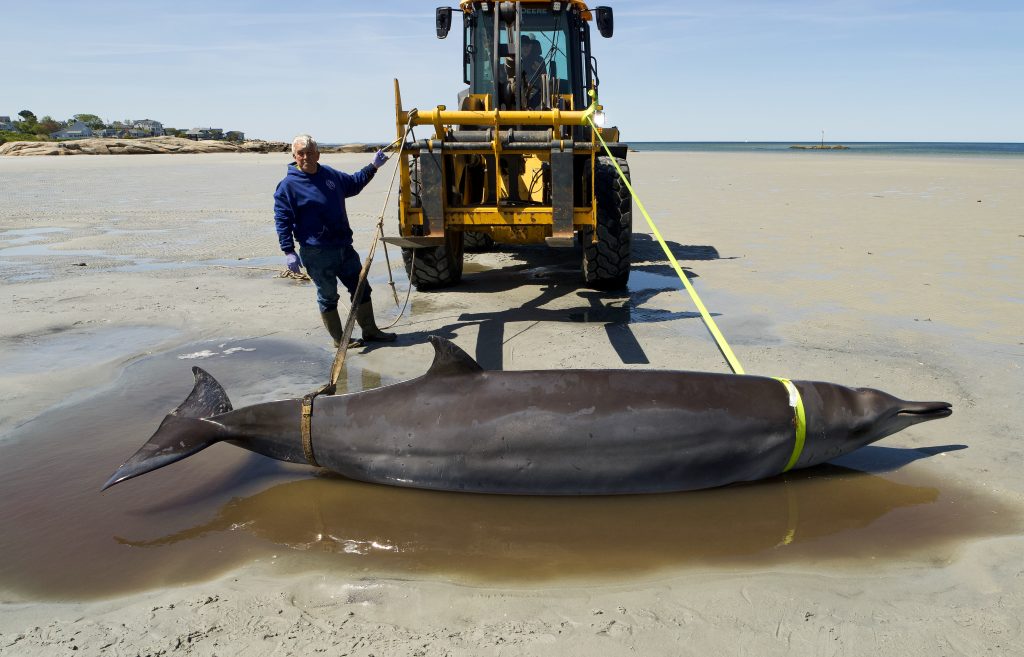 This past year, Seacoast Science Center Marine Mammal Rescue (MMR) staff and volunteers responded to 116 cases (as of 11/28/23), some of which were very unusual cases, including two new-to-our-list species. In May, MMR teamed up with NOAA Fisheries New England/Mid-Atlantic to respond to a Sowerby’s beaked whale (Mesoplodon bidens) that live-stranded in Gloucester, MA but quickly expired. It is highly unusual for beaked whales to become stranded, as they inhabit deep waters off the continental shelf edge of the North Atlantic Ocean.
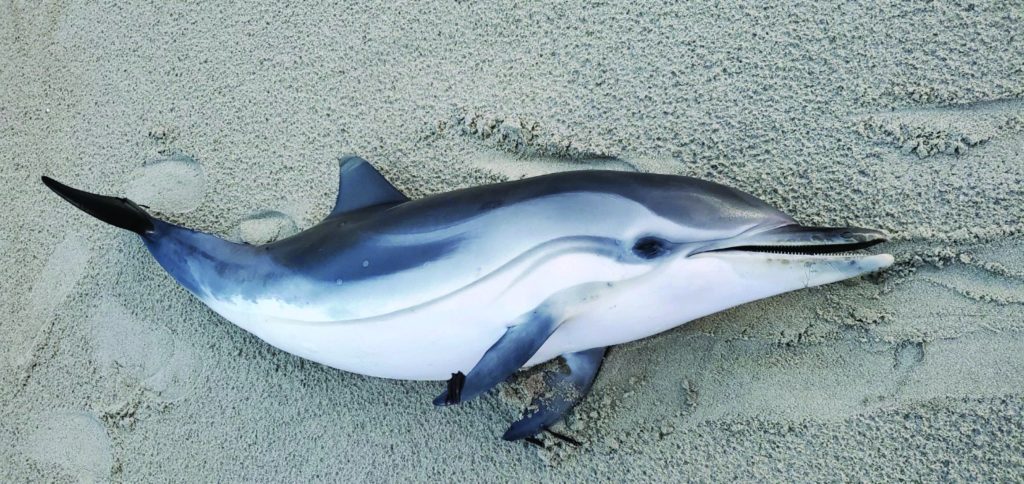 In July, we responded to a newly deceased striped dolphin (Stenella coeruleoalba) that stranded on Hampton Beach. Striped dolphins are a deep-water species that prefer temperate and tropical regions. Also in July, our Director of Marine Mammal Rescue, Ashley Stokes, assisted with the necropsy of a young sperm whale (Physeter macrocephalus) in Duxbury, MA. While not in our response territory, it was another first for MMR.
In all of these cases, a full necropsy (animal autopsy) was performed to attempt to determine cause of death. Results from a necropsy can take several months to complete, but initial findings were as follows: the Sowerby’s beaked whale had a minor parasite load in its lungs and gastrointestinal tract, no food in its stomach or intestines, and swelling of the brain. The striped dolphin had evidence of granulomatous pneumonia, a heavy parasite burden, and moderate peritonitis. The sperm whale’s stomach revealed various marine debris.
Could the cases mentioned above, excluding the sperm whale, be caused by our changing climate? While we cannot draw conclusions based on isolated cases, continual monitoring and stranding response data are helping to paint the picture. Evidence of the impact of climate change on “ice seals,” including harp (Pagophilus groenlandicus) and hooded (Cystophora cristata) seals, is more clear.
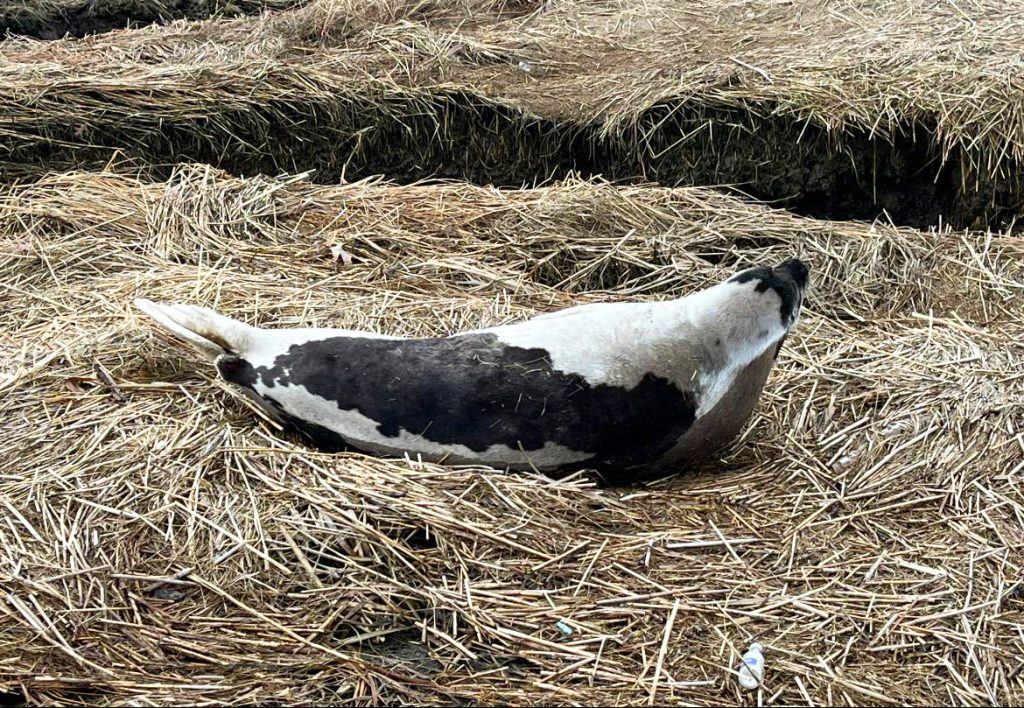 Here’s what we know. These arctic seal species inhabit the cold waters of the Arctic and North Atlantic Oceans, but it is normal for them to travel southward during the winter and early spring. However, the number of cases vary significantly from year-to-year. In addition to anthropogenic threats such as hunting, fisheries interactions/entanglement, and vessel strikes, there’s something else that is likely having an effect on their population. This is where the emerging impacts of climate change may come into focus. Harp seals, like the one pictured above, are reliant on the availability of suitable pack ice as a site to give birth, rear their young, and molt their coats. Because of that, the stakes associated with climate change and the area that these majestic marine mammals call home couldn’t be higher.
Winters that have decreased amounts of sea ice in the Gulf of St. Lawrence, coupled with storm activity during the birthing and weaning time, can have catastrophic effects on the number of successful pups in that birthing year. If the ice melts or storm activity flushes the pups off the ice floes before they are ready, many pups from that generation will drown. By tracking seal cases, along with conditions in the Arctic, we can theorize that high numbers of juvenile harp seal cases reflect favorable conditions for rearing pups in the previous birth years. The opposite would also be true: winters with low numbers may indicate challenging conditions for the pups.
One thing is for certain: our warming climate is causing early ice melt in the Arctic. The work to fully understand how climate change is influencing ice seals, and all marine mammals, is critical to maintain balance in our marine ecosystem. SSC Marine Mammal Rescue is dedicated to contributing scientific data that is helping to increase our understanding and drive important conservation efforts here close to home, and globally.
To learn more about Seacoast Science Center’s Marine Mammal Rescue program, click here. To support our work by making a donation today, click here.
