By Sam Rutka, Lead Aquarist, Seacoast Science Center
Clownfish form the subfamily Amphiprioninae, occasionally referred to as “anemonefish,” inhabit the tropical waters of the Indo-Pacific, where each species establishes residence within the tentacles of sea anemones (Actiniaria). The symbiotic relationship between clownfish and sea anemones is a prime example of mutualistic symbiosis in marine ecosystems. Mutualism, as it is known, is a kind of symbiotic relationship wherein two or more species gain significant survival advantages from their interaction with one another. In the case of clownfish and anemones, both species benefit from each other’s protection, cleaning, and nutrient exchange.
The foundation of this mutualism lies in the clownfish’s mucus coating which protects them from the anemone’s specialized stinging-cells called nematocysts. These nematocysts discharge venomous harpoon-like threads that can capture and immobilize prey. This marvelous mucous membrane, rich in glycoproteins, prevents the discharge of the anemones nematocysts and neutralizes their effect, leaving the clownfish unharmed and free to enter and exit the treacherous tapestry of tentacles at will. There are competing hypotheses regarding whether this mucous layer is an inherent adaptation, or if each individual fish builds their immunity to the anemone’s venom through gradual exposure.

The stinging tentacles of the anemone offer the clownfish effective defense against a wide range of predators, including larger carnivorous fish that have learned not to poke their snouts into the swaying sea creature’s stingers. Having a heavily fortified territory not only improves the clown’s survival but also provides a safe, stable environment for breeding. While the clownfish may not lay their eggs inside of the anemone, they will stick them to flat surfaces in close enough proximity that the tentacles will act as a deterrent to predators and still offer refuge for the parents.
Clownfish are known to exhibit territorial behaviors, aggressively defending the anemone from potential predators such as butterflyfish (Chaetodontidae), which are known to munch on anemone tentacles. Furthermore, clownfish actively clean the anemone by removing detritus or other nonedible debris. Even the simple act of the fish swimming in and out of the anemone increases water circulation, enhancing the diffusion of oxygen to the anemone’s tissue. This highly attentive and protective behavior is crucial, as it helps maintain the anemone’s health, strength, and physical integrity.
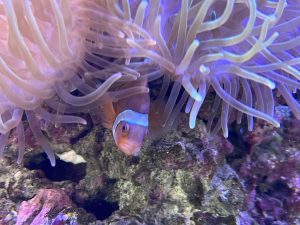
Nutrient exchange is another significant aspect of mutualism. Clownfish have been documented venturing out of the safety of the tentacles to snatch food, and then bring it back to feed to the anemone as well as themselves. In addition to mouth feeding, clownfish excrete a form of nitrogen, which is absorbed by the anemone and utilized as a fertilizer for the zooxanthellae, a photosynthetic algae residing within the anemone’s tissues, enhancing the anemone’s overall nutrient intake.
This complex symbiotic association between these magnificent marine animals exemplifies co-evolution, where the adaptations of both species are fine-tuned for mutual benefit.
Clownfish are dependent on the protection of their host, while the anemone gains protection, cleaning, and nutrient acquisition through their clownfish residents. This remarkable demonstration of mutualism and ecological interdependence plays a crucial role in maintaining the biodiversity of coral reef ecosystems.
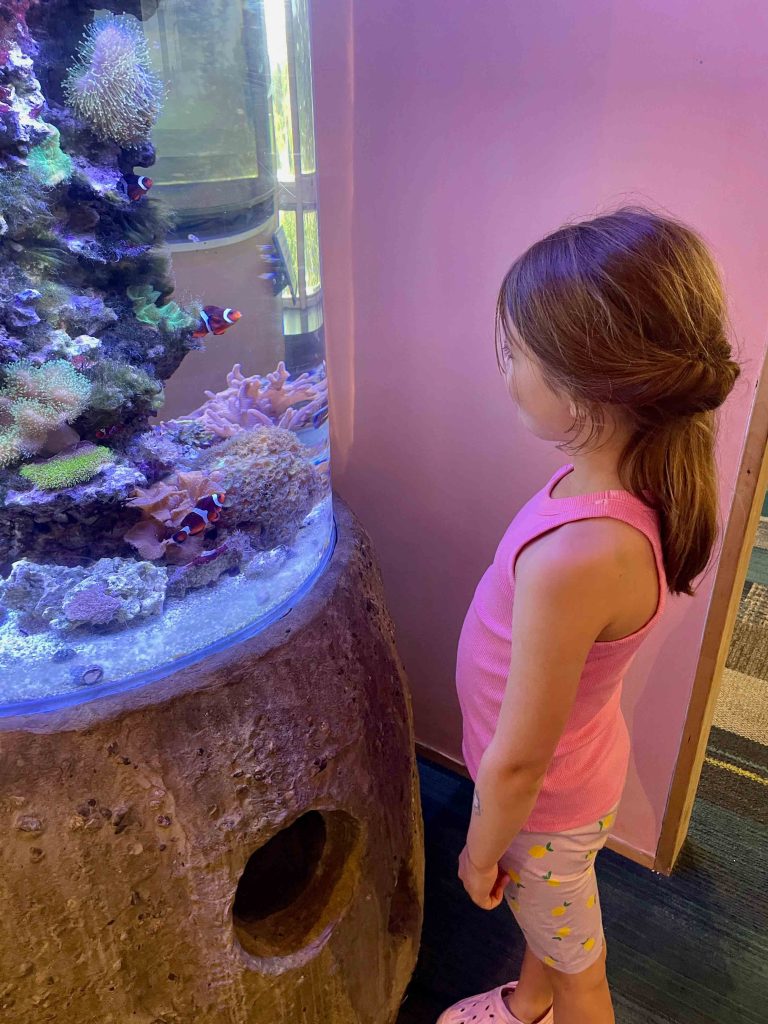
So, next time you are chatting with the Finding Nemo fan in your life, you can share the science behind the story! During a visit to Seacoast Science Center, be sure to stop by and watch this mutualistic relationship between clownfish and anemone yourself, in our Restoring Reefs Gallery.